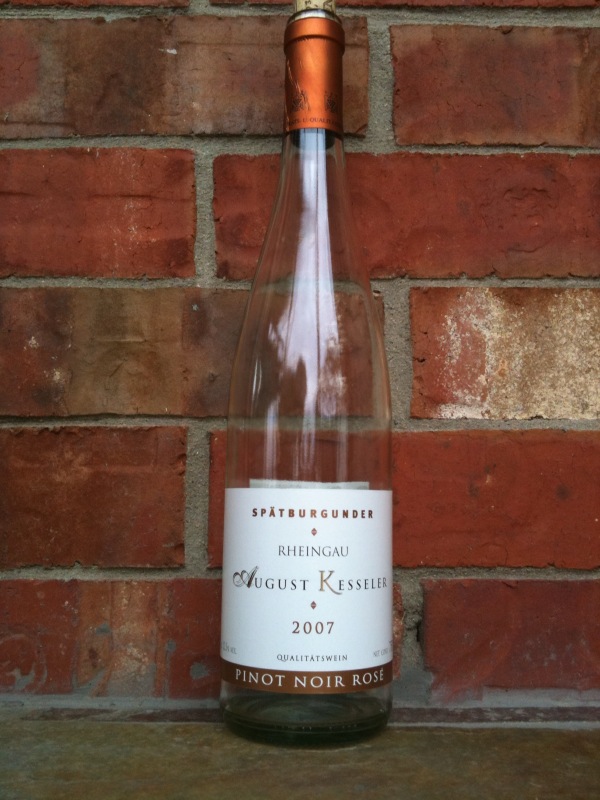
Most people, myself included, think of white wines almost exclusively when they think of Germany. But they do make wine from red grapes – in particular Pinot Noir, known there as Spätburgunder. In fact, according to The Oxford Companion to Wine (3rd edition, 2006), Spätburgunder is Germany’s third most planted variety and totals over half of the acreage of Riesling. This bottle is a rosé of Spatburgunder.
Producer: August Kesseler
Grapes: 100% Spätburgunder (aka Pinot Noir)
Appellation: Rheingau (Germany)
Vineyards: Assmanshäuser Höllenberg – The vineyards are on south- and southwest-facing slopes with soils of “heat-storing slate-phyllite.” The vineyards includes vines that are up to 100 years old.
Winemaking: This rosé wine is produced via the saigné method. During the production of the winery’s normal Spätburgunder, some of the juice is drained off during skin contact to improve the quality of the red wine. That drained-off juice becomes a rose – a lovely byproduct.
Alcohol: 12.5%
Price: $16.78 at Spec’s in Austin
My tasting notes: The unusual color is one of the things that drew me to this bottle on the shelf. It’s very pale and I wouldn’t describe the color as pink so much as ‘light brown’ – okay maybe copper is nicer way of saying it (sorry no pics before the bottle was empty!). The nose was rather closed, I had trouble picking up much beyond a general sweetish-wine smell and maybe some strawberry. On the palate, it offers up a pleasant candied apricot flavors and a bit of lime, with an undercurrent of stony minerality. It has 24.4 g/l of residual sugar, so it is sweet, but for me the acidity balances it well and it finishes clean.
Overall impression: A perfectly nice medium sweet rose. Definitely worth a try if you want to experience a different side of Germany, though I’d be more enthusiastic if it were $5 cheaper. B-
Free association:
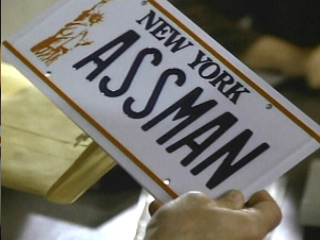
Kramer's ASSMAN plates from the Seinfeld episode "The Fusilli Jerry"
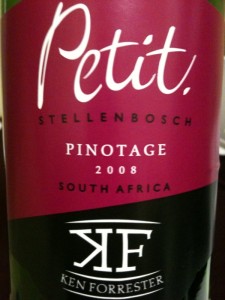
Grapes: 100% Pinotage. A cross of Pinot Noir and Cinsault, resembling neither, it was created in the 1920s in South Africa by Stellenbosch University professor A. I. Perold. Here’s a good overview of the grape and it’s history.
Appellation: Stellenbosch (W.O. or Wine of Origin, South Africa)
Vineyards: Southeast-facing slopes.
Winemaking: Pressed off the skins early to avoid the heavy tannins sometimes associated with this grape.
Alcohol: 14%
Price: $9.99 at Spec’s in Austin
My tasting notes: Serious blue cheese attacks on the nose – like a really pungent Cabrales. The fruit aromas are plummy with an ashy note. On the palate it is nice and juicy with a good silkiness for a $10 wine. Good red fruit. I’m really enjoying this.
Overall impression: An affordable introduction to Pinotage. It’s definitely got the funky Pinotage character, but there’s plenty of juicy fruit to please. ‘n goeie wynB
Appellation: Columbia Valley (though from a single vineyard; see below)
Vineyard: Evergreen Vineyard, a 452 acre vineyard planted to 10 different white varieties and farmed by Milbrandt Vineyards. It is rather young, having been planted in 1998. The vineyard currently falls under the large Columbia Valley AVA, but is a part of the “Ancient Lakes” area, which is seeking AVA status. Ancient Lakes is a cooler region with soils of clay, sand, silt and Caliche.
Winemaking: 100% stainless steel fermentation and aging
Alcohol: 12.5%
Price: $11.77
Package: Kick-ass label. Screwcap.
My tasting notes: A slight spritz. Bright green apple and pear aromas on the nose with a waxy quality. Round, luscious mouthfeel yet with lively, zippy acidity. Makes me think of Clearly Canadian sparkling water from back in the 90s, if they made an apple and kiwi flavor. (I mean that as a complement – I loved Clearly Canadian back then, especially Mountain Blackberry and Western Loganberry flavors.)
Overall impression: A very enjoyable drink. A crowd-pleaser for your next party. Hell, I might pick up another bottle to have on hand for Thanksgiving. B
Free Association: I loved playing this game at the bowling alley arcade I was a kid.
This is the first post of a new series I’m starting on oddball wines. I thought I’d start in Italy, which is full of indigenous grape varieties that are produced in a small region and hardly anywhere else. This is one of those: Lagrein. Have you ever had one? Ever heard of it?
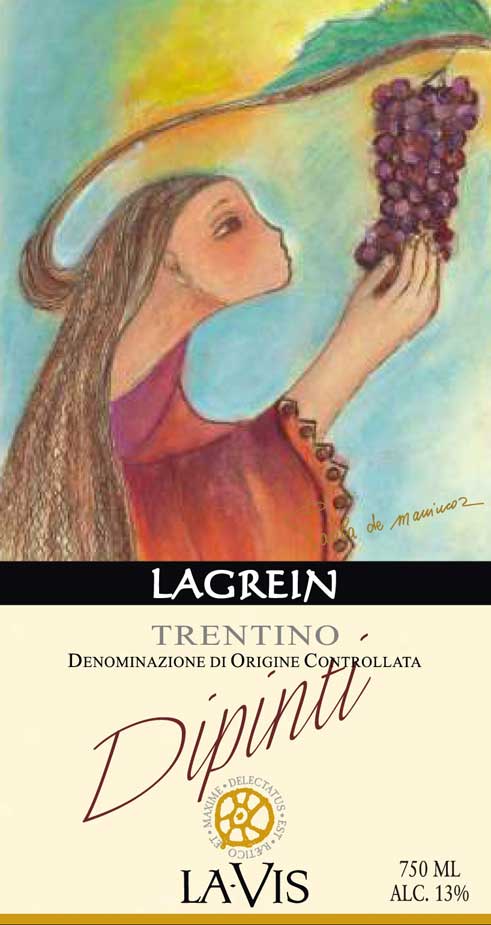
La Vis Dipinti Lagrein 2007
Producer: La Vis
Grapes: Lagrein. La-what? It’s a red grape variety from the Trentino-Alto Adige region of Italy that is related to Teroldego. It’s pronounced Lah-GRAYN (hear it here).
Appellation: DOC Trentino, in northeastern Italy up near the Austrian border. Thirty years ago, red wines accounted for 80% of Trentino’s vineyard land, but today it’s down to 40%, with Merlot being the most common red grape (Chardonnay is the most planted white). However, the indigenous grapes are hanging on. [Info from The World Atlas of Wine.]
Winemaking: Spends only 2 months in oak.
Alcohol: 12.5%
Price: $11.77 at Spec’s in Austin
My tasting notes: Dark color, though not opaque. I get dusty plum and cherry fruit on the nose, with a substantial Old World swampy/barnyardy stink. There’s something a bit wild to the fruit aromas, too. Interesting. On the palate, it’s medium-bodied and starts off sharp and angular (though not necessarily in a bad way), with under-ripe raspberry flavors, light minerality and grippy tannins. A cranberry tartness and prickly acidity linger on the finish. I came back to this wine after it was open for about 48 hours and it was drinking very nicely. The acidity and tannins had softened a bit and the fruit was more evident on the palate. It paired well with a sausage, kale and white bean soup.
Overall impression: Not straight-up delicious, but really interesting and food-friendly. Worth it just for the geek-cred you’ll earn for trying this uncommon grape variety. B
Free association:
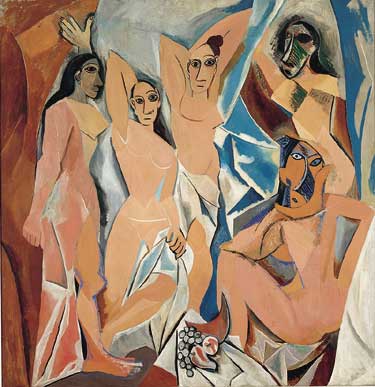
Demoiselles d'Avignon - Pablo Picasso
More info:
Tech sheet, which doesn’t state the vintage, so assume the specs are approximate.
I’m going to start a new series on the blog focusing on oddball wines. Oddball might mean an uncommon grape variety, an unusual blend, an out-of-the-way region, a variety in an unexpected location (French Zinfandel?) or an unusual production method. Now, I’m sure that sometimes a few of you will think a wine is not so odd (“I drink Australian Gargenega every week”), but I’ll aim for stuff that I expect 9 out of 10 of you (and probably me, too) won’t have ever tasted.
I’m still looking for a name for this series. What should I call it? Oddball Wine of the Week? Weird Wine Fridays? Any ideas?
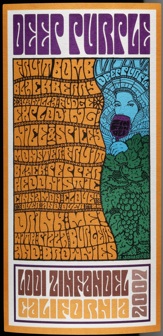
I should have known better than to buy this wine. I generally avoid wines with such gimmicky names/labels. But a few months ago I was planning a series of posts on Lodi old vines Zinfandel and was picking up just about every bottle of it I saw. I realized later that this one doesn’t say old vines on the label, so I didn’t include it in the series.
Producer: Deep Purple
Grapes: Zinfandel (it’s not stated on the label or fact sheet if it is 100%)
Appellation: Lodi (on the website they note that Lodi is “a totally respectable wine growing area mentioned in a Creedence Clearwater song“)
Winemaking: 8 months in French and American oak.
Alcohol: 13.9% on the label (13.6% on the fact sheet)
Price: about $12
My tasting impressions: In terms of color, “deep purple” it is not. I’d call it light-to-medium color, certainly not inky dark. The first whiff of this wine takes me back to 4th grade. Did you have a slot-car track when you were a kid? Well, remember when, after about 50 laps around the track, you’d get this overheated, metallic smell? That’s what I thought of when I first smelled this wine. (An overheated blender smells about the same, but my mind when to that slot-car track first.) That blows off after a short while and the (somewhat candied) bright berry aromas come to the front. There’s a bit of vanilla and green pepper, too. On the palate, it’s medium-bodied with plum and cherry flavors and a slight herbal edge. Needs some acid.
Overall assessment: In the end, I find this to be a rather simple wine. Expectations play a big role in how satisfied you are with a wine, I think. Based on the name Deep Purple and the wild label with words like “Monster Fruit”, “Exploding” and “Hedonistic”, I was expecting something much different. While it has plenty of fruit (if you don’t mind the candied sort), it’s not a big, bad, hedonistic experience. C/C-
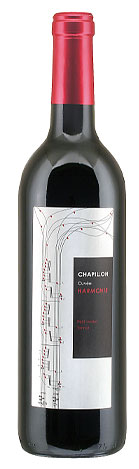
There is very little information about this wine online. It’s not even listed on the importer’s website and the winery’s blog doesn’t say much more than what’s on the label. But it got 90+ points from Jay Miller in the Wine Advocate so I guess that’s why it ended up at Costco. When I saw that it was Petit Verdot and Tannat from Spain and it was 10 bucks, I couldn’t resist.
Chapillon Cuvée Harmonie 2006
Producer: Chapillon
Grapes: 90% Petit Verdot, 10% Tannat
Appellation: “Red Wine from Aragon” (Spain)
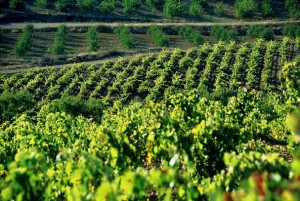
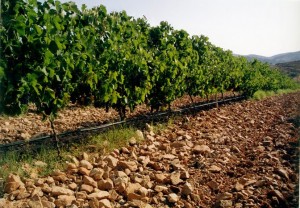
Vineyards: No info, but some photos from the winery’s blog are at the bottom of this post.
Winemaking: No info
Alcohol: 14%
Price: About $10 at Costco.
My tasting notes: Good dark color with a vibrant red edge. An enjoyable and interesting nose. Initially, I get loads of black pepper and behind that are pine and dusty violet aromas. On the palate, it is very green/herbal/stemmy and dry, with bright (not rich) raspberry and blueberry flavors and a bit of meatiness. A few times I catch a hint of creamy oakiness, but it’s fleeting. I’d say it leans toward medium-bodied.
Overall impression: Pleasant and interesting, though probably not compelling enough to make me seek it out again. I can’t help but think it might be improved with a healthy dose of something richer in the blend. A decent (and cheap) introduction to varietal Petit Verdot, perhaps. C+/B-
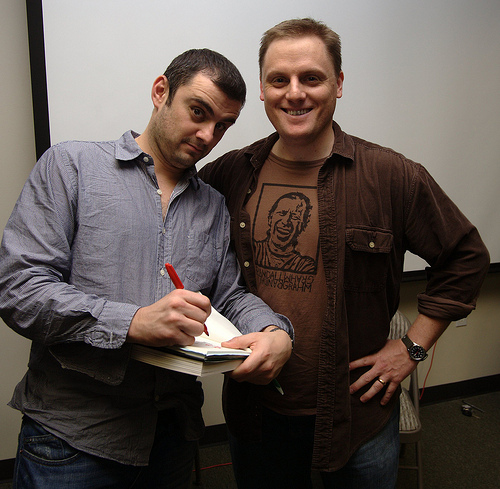
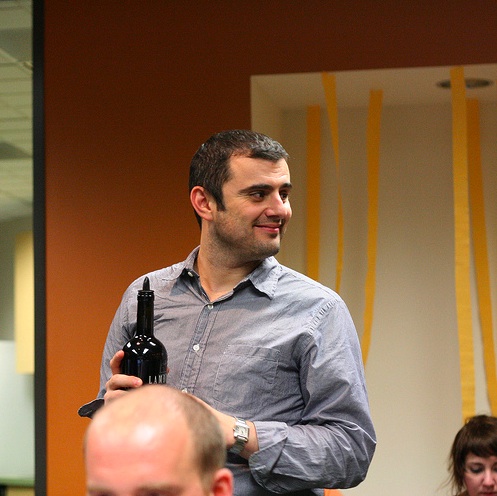
Gary Vaynerchuk made a stop in Austin recently on his book tour for Crush It!: Why NOW Is the Time to Cash In on Your Passion. In addition to the three book signings he did around town that day, he and Lindsay Ronga organized a Cork’d tasting that night. (Cork’d is the wine social networking site GV bought in 2007; Lindsay is the CEO). I was fortunate enough to get an invite (thanks, Addie!) and had a great time. I thought I’d share a bit about it.
Gary is unpretentious about wine. And this was not a pretentious wine tasting. Firstly, it was held in the conference room of a local tech firm. Secondly, the wine geeks seemed to be in the minority. Thirdly, we were drinking from plastic cups.
As this was a Cork’d event, the idea was for everyone to post their notes to the site “live” as we were tasting them. It was a diverse crowd and a diverse range of opinions and scores were collected (every wine received scores as low as mid-70s and as high as low-90s). Below are the wines we tasted and my comments.
Terlato Family Pinot Noir 2007 Russian River Valley
For me this was easily the best wine of the night. My notes were: Nice cherry, meaty and herbal nose. The fruit gets darker on the palate, but very clean and pure. Very smooth and silky on the front then tightens up on the back. This is a lip-smacking, delicious pinot. Would be a great food wine. I scored it a 90 (Cork’d requires a score on the 100-pt scale).
Rutherford Hill Merlot 2005 Napa Valley
My notes: The color is a bit light. The nose is juicy, “purple-y” and stemmy/green. On the palate, the red fruit comes across a bit fake to me, and thin. Rustic tannins. Feels like I drank some sediment. Buttery oak. A little stemmy. A nice mineral note in there. Dry finish. Kinda of an awkward wine for me. It’s not bad, but I wouldn’t seek it out again. Score: 85
Mont Tauch Reserve Fitou 2006
My notes: I like this nose – jammy for a French wine. On the palate, it feels light and tannic at the same time. I’m having trouble pegging this one. Fruit seems a bit tight one moment, then bright the next. I’d like to try this again when I can have a more leisurely glass or two. Score: 86
Lamborn Family Cabernet Sauvignon 2004/2005/2006 Howell Mountain
This wasn’t a vertical. Rather, there was not enough of any one of these to go around, so everyone got poured 1 of the 3. I got the 2006. My notes: Good dark color. A dark, brooding, smoky nose. On the palate its got jammy fruit flavors. Feels sticky in the mouth, like a chewy candy. Very dry. Finishes hot. The nose appealed to me, but the palate… not so much. I’d like to try it again with a few more years of bottle age. (Score reflects how it’s drinking for my palate tonight.) Score: 86
Flat Creek Super Texan 2006 Texas Hill Country
This one was meant to be a surprise blind tasting for Gary, while the rest of the crowd was told what it was. There were some loose lips from one or two people who didn’t quite realize what was going on so Gary probably heard something. It’s a wine I’ve liked in the past and I was kind of excited to see how he would like it. He panned it. I found it to be light but tasty. My notes: Color has an orange cast. Nose has appealing dried fruit character. Nice mouthfeel. Silky red fruit. Long finish. Score: 89 (probably generous in retrospect)
You can see the list at Cork’d and click each wine to see everyone’s notes.
All in all, it was a great night. No blockbuster wines for me, but some nice (& pricey) bottles I wouldn’t normally try (and did I mention it was free!). It was fun to see so many tasting notes on the same wine from the same tasting.
Plus I got to meet some good people: @ronga, @baconator, @personalwine, @amberdemure, @SummerH, @smartdonkey, @wesley83. And Gary…
Yes, my teeth are purple. Yes, that's Randall Grahm on my shirt.
Update: I realized I published this without really saying much about Gary. In person, he’s pretty much exactly like he is on camera only dialed down a notch. Or maybe that was the fact that it was his 4th stop of the day in the middle of his book tour. Either way he’s unfailingly friendly, taking the time to go around the room and shake every one’s hand individually and chatting them up. As for the wine, he liked the Terlato, Lamborn (he had the 2004) and Rutherford Hill wines, was ho-hum on the Mont Tauch and panned the Flat Creek (as I mentioned above). Thanks, Gary, for putting on this event! Hope to see you again the next time you come through Austin.
 Most people, myself included, think of white wines almost exclusively when they think of Germany. But they do make wine from red grapes – in particular Pinot Noir, known there as Spätburgunder. In fact, according to The Oxford Companion to Wine (3rd edition, 2006), Spätburgunder is Germany’s third most planted variety and totals over half of the acreage of Riesling. This bottle is a rosé of Spatburgunder.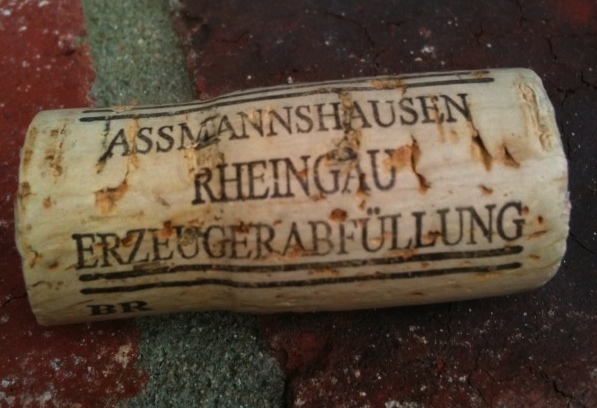
.-(cc_nonderived)%26hl%3Den%26safe%3Doff%26client%3Dsafari%26rls%3Den%26sa%3DG%26um%3D1&ei=Js4JS5u-LZOXtgesoJSTCA "cabrales")

 La Vis Dipinti Lagrein 2007
 .]
.]

 Chapillon Cuvée Harmonie 2006
 . In addition to the three book signings he did around town that day, he and Lindsay Ronga organized a