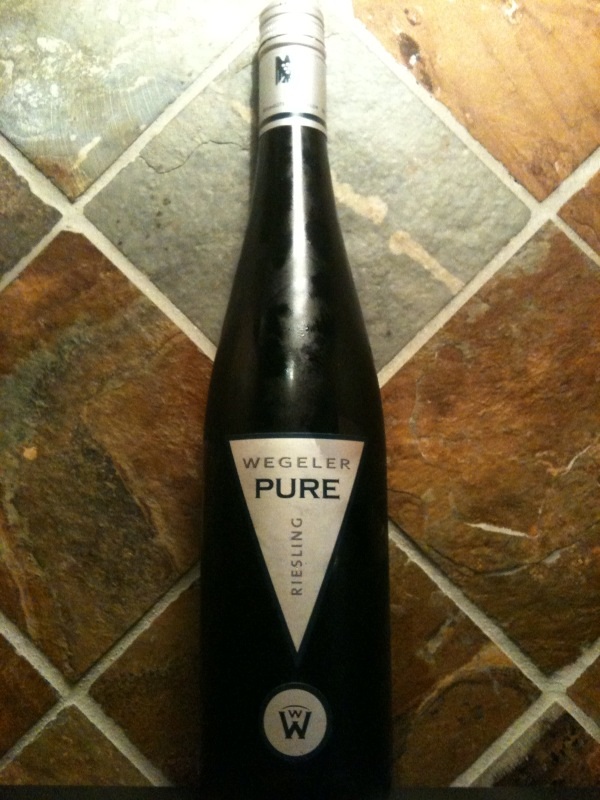
Wegeler PURE Riesling 2006

I’ve never really gotten in the habit of drinking much German wine. Partly because I’ve always drunk more red than white. And partly because of all the uncertainty around sweetness, especially in my early wine-drinking days when I turned my nose up at any hint of sweetness, thinking that made me more sophisticated. More than most categories, I feel like I need a guide when it comes to German wine, so I took a chance at this bottle, which came highly recommended from Garagiste.

Producer: Wegeler

Grapes: 100% Riesling

Appellation: Rheingau (Germany)

Vineyards: Loess/loam and clay soils

Vintage: 2006, so it’s got a bit of bottle age on it.

Winemaking: no info

Alcohol: 11.0%

Price: I paid $11.99 via Garagiste, but this normally retails for around $20.

Tasting notes: Pale, brassy color. Pretty citrus and stone fruit aromas lead the way, accented with talc and gravel notes. There’s a little pineapple juice, too, and I keep thinking it’s reminding me of Juicy Fruit gum. Round fruit flavors with a touch of sweetness (medium-dry) on the palate, but with bright acidity that makes this very fresh, and dare I say, PURE. A little crushed rock shows as well for added interest. This wine was drinking well for several days after opening.

Overall impression: This is the Germans doing what they do. And I appreciate it. I bet you would to. B

Free association:
More info:

Imported by Rudi Wiest Selections.

10,000 cases produced.
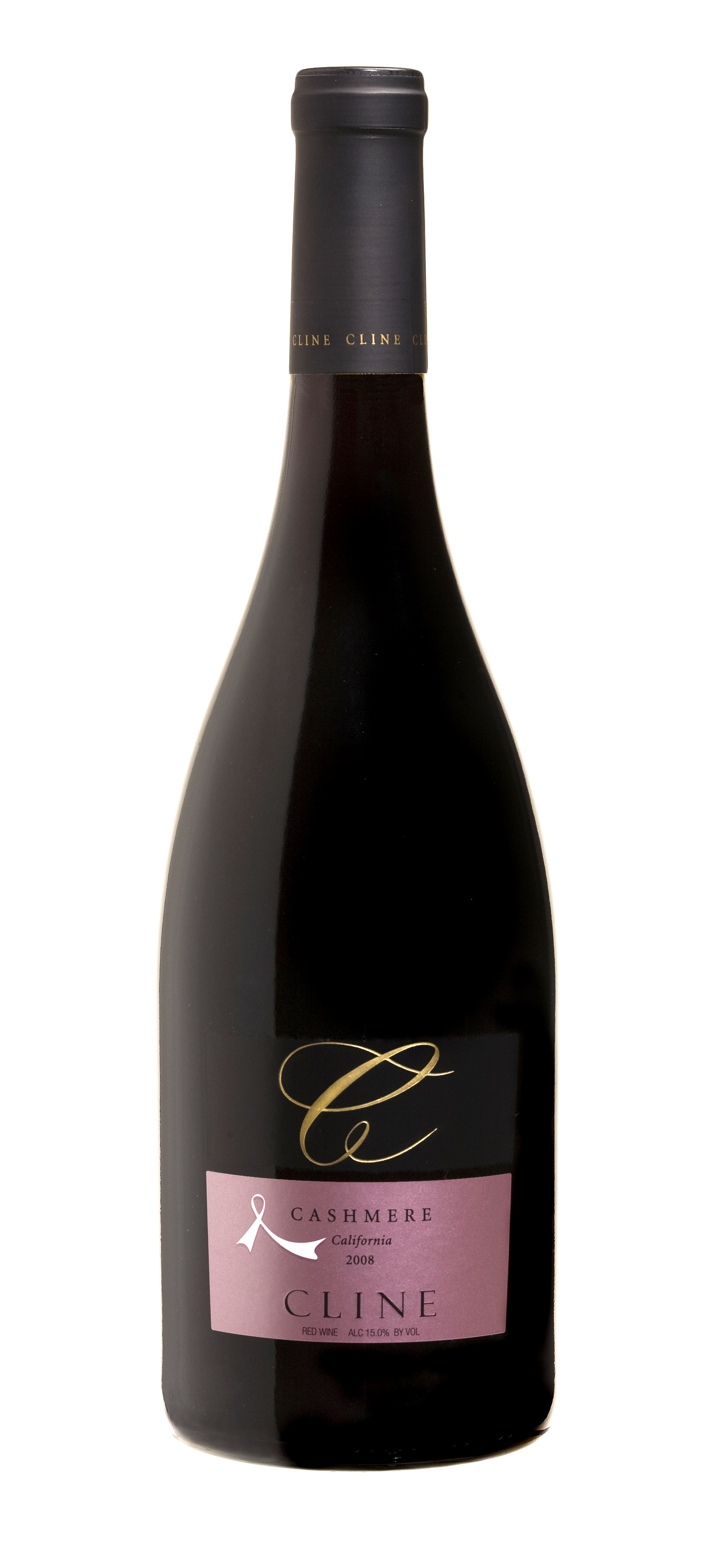
Mourvèdre Monday #21: Cline Cashmere 2008

I always look forward to opening another bottle of wine from Cline Cellars. Cashmere is their GSM blend (Grenache, Syrah and Mourvèdre) and in their latest release – the 2008 –  they’ve upped the share of Mourvèdre in the blend. Your favorite blogger’s favorite grape is now the lead dog at 44%. (Let’s all pretend they did that in response to the shear market-moving force of VINEgeek.com.)

Producer: Cline Cellars

Grapes: 44% Mourvèdre, 35% Grenache, 21% Syrah

Appellation: California (AVA)

Vineyards: From the winery’s tech sheet…

“Contra Costa County provides the lion’s share of the grapes for this blend. Careful attention to the Massoni Grenache vineyard in Oakley involves cluster thinning and leaf pulling, which increases fruit concentration. Big Break Grenache is harvested from older lower yielding dry-farmed vines. The Oakley Syrah experiences warm days and cool nights. And the Mourvedre, planted in sand soil, is dry-farmed.”

Vintage: 2008

Winemaking: 9 months in dark toast French oak (25% new)

Alcohol: 15.0%

Price: Around $15

Tasting notes: I get raspberry cream and a bit of black pepper on the nose. The palate is blackberry pie filling, but with the polished mouthfeel I’ve come to expect from Cashmere (though not as luxuriously silky as the 2007). A brief bit of grip at the end that quickly morphs into a sweet, oaky finish. I don’t get the minty note I usually get in wines with fruit from Cline’s Big Break vineyard, which has eucalyptus trees adjacent to the vineyard.

Overall impression: Because of the increased presence of Mourvèdre in the blend, I wanted to like this even more than past vintages, but I have to say I liked the 2007 a bit more. But, the 2008 is another crowd-pleasing Cashmere from Cline. (Old-Worlders may want to pass) B

Free association:

(it's a Blackberry... get it?)

Image credit: 1sock via Flickr

More info:

Grape Stories/CellarTracker reviews (avg: 87 pts)

Cline donates a portion of the proceeds from every bottle of Cashmere sold to the Breast Cancer Network of Strength.

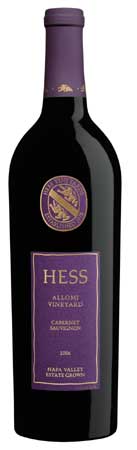
Hess Allomi Vineyard Cabernet Sauvignon 2006

Hess has produced a number of bottles that have been noted as great values by the big wine publications in the past few years. When I saw this single-vineyard Napa Cab on sale at my local supermarket, I thought I’d give it a try.

Note to wineries: putting the vineyard name(s) on the bottle always makes me more interested in your wine, whether I’ve ever heard of the vineyard(s) or not.

Producer: Hess

Grapes: 100% Cabernet Sauvignon

Appellation: Napa Valley AVA

Vineyard: Allomi Vineyard, a 210-acre estate vineyard at the eastern base of Howell Mountain (though outside of the Howell Mountain AVA)

Vintage: 2006

Winemaking: 18 months in American oak (30% new barrels)

Alcohol: 14.2%

Price: I bought it at about $20 at the supermarket, discounted from around $25-30.

Tasting notes: Currants and spice dominate on the nose, with hints of woodshop and creme brulee. On the palate, it s smooth-textured and weighty with rich, plummy fruit. A slightly minty-cool tingle at the back. A nice bit of tannic structure shows at the end, though this is certainly not a tannic monster Cab.

Overall impression: While it may not blow your mind, I doubt this one will disappoint you if you’re looking for a quality bottle of tasty California Cabernet. B

Free association:

More info:

If you like 90-pt validation, Connoisseurs’ Guide gave it 90 points.

Mourvèdre Monday #20: Bonny Doon Mourvèdre 2004

Opening one of Randall Grahm’s wines is always an event for me. I had the 2003 version of this wine in my cellar for 4 or 5 years before I gave in to temptation and pulled the cork; I was not disappointed. Though this is a 2004, I didn’t have to cellar it for half a decade. It was a special release from “Randall’s Closet of Curiosity” made available to DEWN members earlier this year.

Producer: Bonny Doon Vineyards

Grapes: 100% Mourvèdre

Appellation: Says Central Coast on the bottle, but the info in the winery newsletter suggests it’s from Contra Costa County (perhaps not within that official AVA?). CCC has some of the oldest Mourvèdre vines in California.

Vineyards: Rose Vineyard – very old vines in sandy CCC soil

Vintage: 2004

Winemaking: couldn’t find any details here other than that they use “a light touch in the cellar”

Alcohol: 13.5%

Price: $18

Tasting notes: After some initial funk blows off, the nose is all crushed rock and raspberries with a smoked meat note. On the palate it has good acid and bright flavors with more red berry and cherry fruit, but with a dark streak (hinting toward blackberry and plum). It’s like a gourmet Jolly Rancher, if there were such a thing (and there should be — get on that, Thomas Keller).

Overall impression: I’m digging the minerality on the nose and the overall purity of the wine. Really good stuff. B+

Free Association: Isn’t that a badass label? I want that on a t-shirt. It reminds me of this Lizard Man drawing from the old D&D Monster Manual.

More info:

CellarTracker reviews (avg: 87 pts)

Vinho Verde Makes Me Want to Quit Blogging

I love vinho verde.

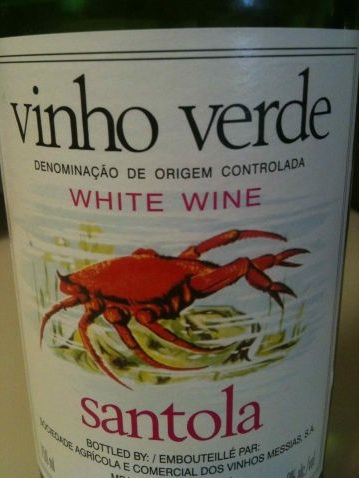
If you’re not familiar with vinho verde, you’ve got to rectify that. It’s a very light, low alcohol (<10%), slightly effervescent white white from Portugal. (Actually, it is an DOC appellation in Portugal and there are red and pink versions, but the vast majority of vinho verde that is exported is white.) It’s called vinho “verde” not because it’s actually green (like crappy American beer on March 17), but because it’s meant to be consumed young. The grapes typically used are Loureiro, Trajadura, Batoca, Arinto/Pedernã, Avesso and Azal. You can also find versions made from Alvarinho, but those are a bit of a different beast – higher alcohol levels and a few dollars more.

What vinho verde is mostly is refreshing. And goddammit I live in Texas and it’s hot. And sometimes I just want a wine that is thirst quenching and fun to drink.

But back to the headline. When I drink vinho verde, I forget about assessing it. I don’t care about flavor descriptor or scores. I just drink it. I usually keep the bottle on the table because I know I’m going to want a quick refill – and at <10% abv you can actually drink several glasses.

And if you pay more than $10 or $11, you did it wrong. You can find plenty of satisfying examples for $7 or $8, or even less.

This is what wine should be about.

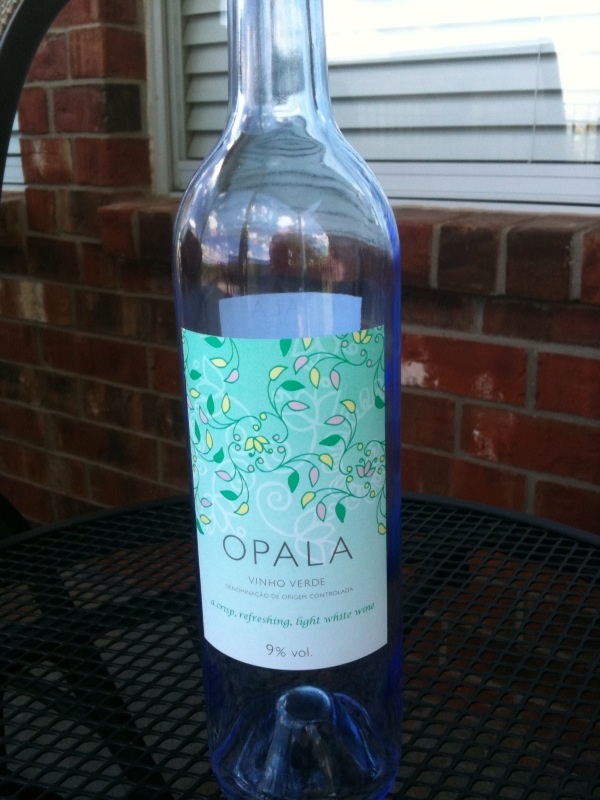
This post was inspired by a recent dinner after I stood over the grill on a 95-degree evening on the second day of Summer. The bottle I opened was the Opala Vinho Verde (NV). In the spirit of this post, I won’t do a full VINEgeek review with grape percentages, vineyard details, etc. Instead, I’ll just hit you with a Free Association:

It’s a lifesaver when you need thirst-quenchin’
like a kiss with a lymon twist, now you know that’s kickin’

and to push deeper into the realm of geekery…